
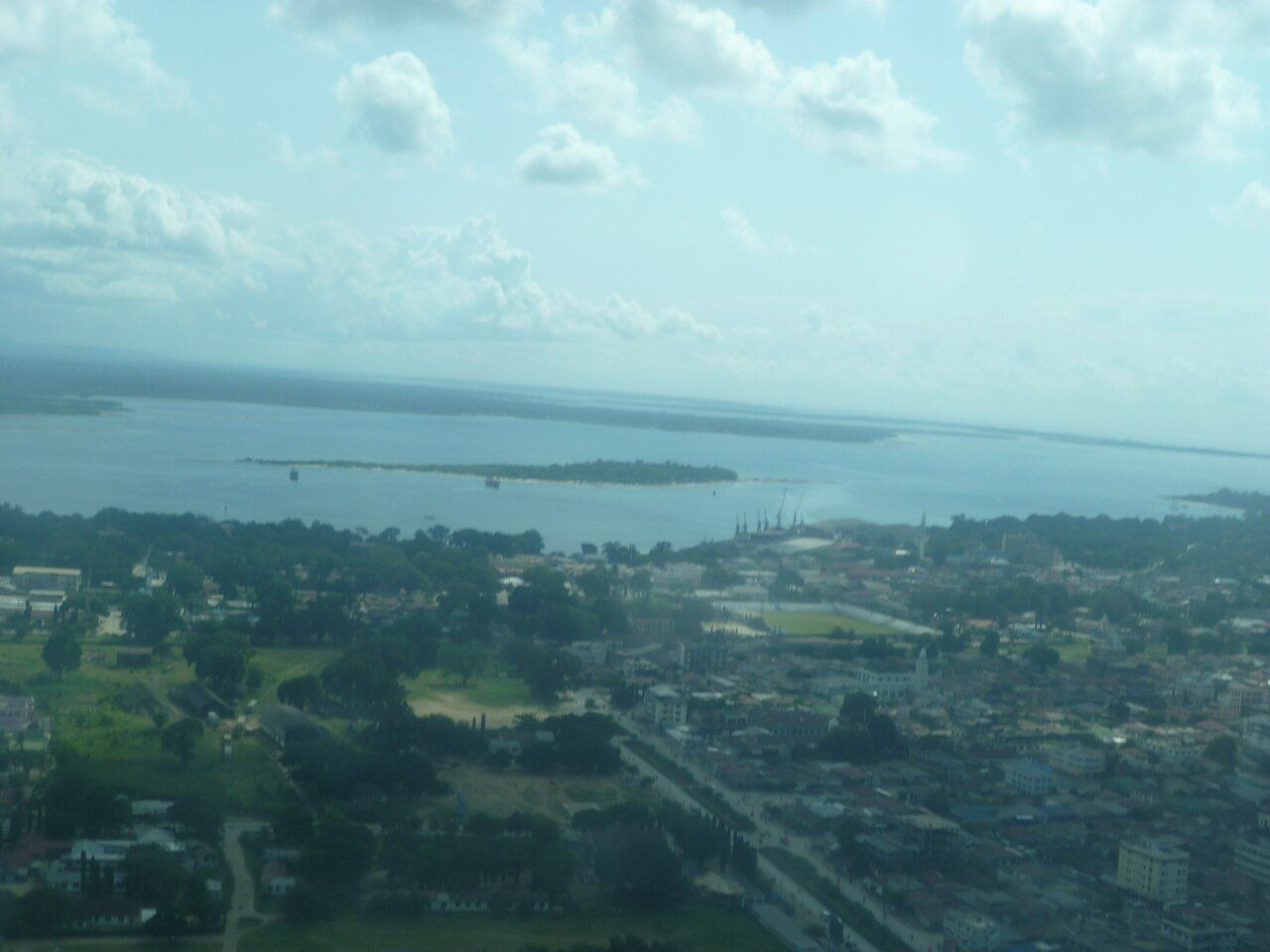
Tanga is a city that seems in no particular hurry. It is the main town of the north-east coast and an old port, yet its streets are broad and shaded, bicycles still outnumber cars in some quarters, and the evenings are spent on benches by the bay. Most travellers pass straight through on their way between Dar es Salaam, the Usambara hills and Mombasa. Staying a couple of days shows you a town with a long past and two remarkable places on its doorstep.
The town and the bay
The centre runs along the bay, with the harbour on one side and a grid of streets laid out during the German colonial period on the other. Some buildings from that time remain, including administrative offices, a clock tower and houses with deep verandas built against the heat, alongside later colonial and post-independence buildings. A slow walk around the waterfront and the older streets in the early morning, when the light is soft and the town is waking, gives a good sense of the place.
Toten Island lies in the bay, low and wooded, with old ruins on it. Tanga was also the scene of a First World War battle in 1914, when a British landing was beaten back; the story is told locally with some relish, including the part played by swarms of disturbed bees. Parks along the seafront fill in the evening with families and food sellers, and it is pleasant to join them.
The Amboni caves
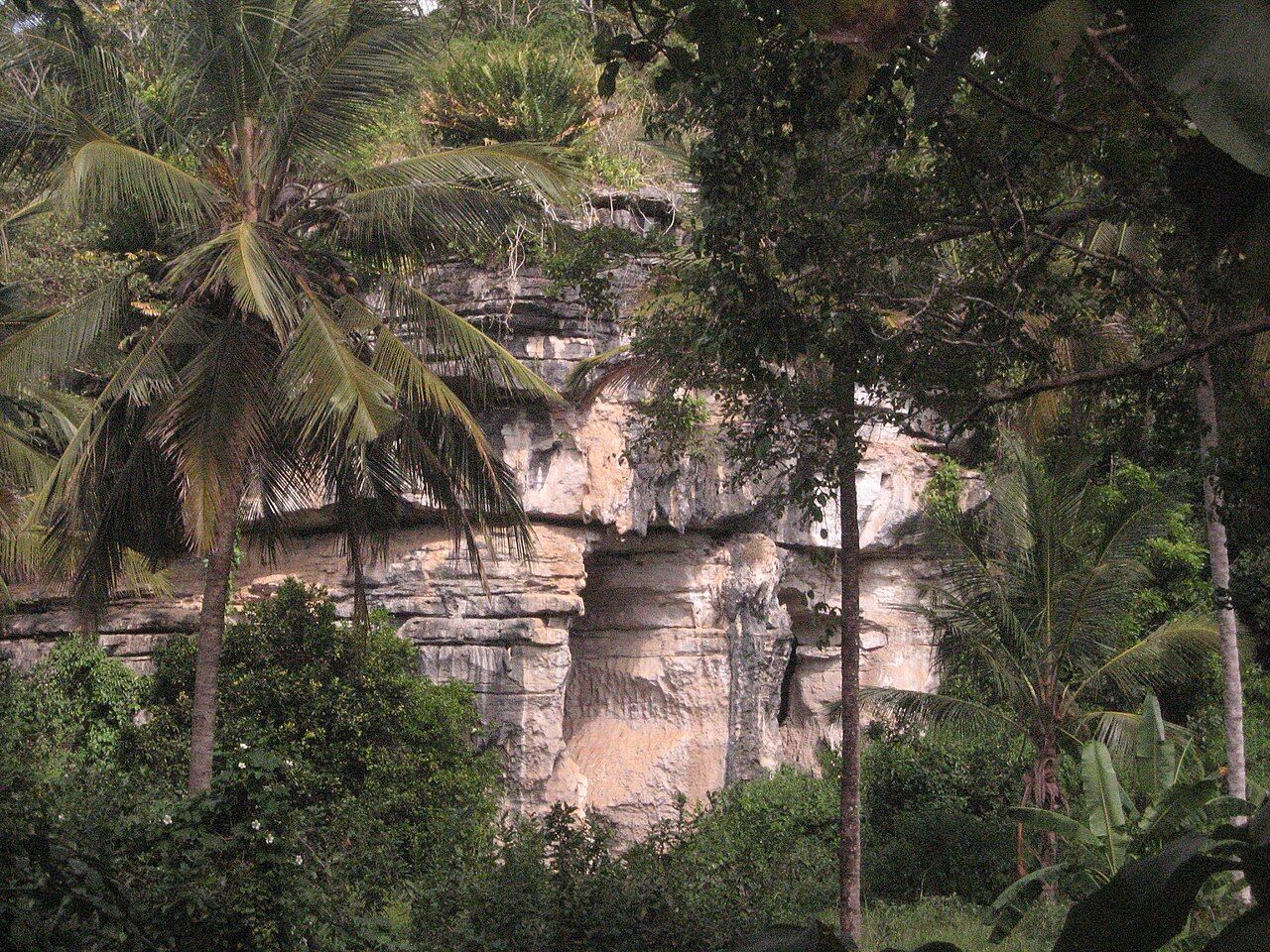
A short drive north of the city, the Amboni caves open into the limestone of a low wooded ridge near the Mkulumuzi River. They are among the largest cave systems in East Africa, a maze of chambers and passages formed over a very long span of time by water working through the rock. Only a small part is opened to visitors, and you go in with a guide from the site, which is both the rule and the sensible thing to do.
Inside, the chambers are dim and cool after the coastal heat. Stalactites and stalagmites take shapes that guides have given names to, and bats hang in some of the higher recesses. Parts of the route are uneven, wet or low, so wear shoes with good grip and bring a torch even if one is provided. Keep your voice down near the bats and do not touch the formations; the oils from fingers stop them growing.
The caves also have a place in local belief. Some chambers are used for prayer and offerings, and people come here to ask for help with health or children. Treat those places as you would a shrine: quietly, without photographs unless your guide makes clear they are welcome. Agree with the guide what the visit covers.
Further on: Pangani, where the river meets the sea
Tongoni and its tombs
South of Tanga, off the coast road towards Pangani, the ruins at Tongoni stand near the shore among baobabs and scrub. The site holds the remains of a mosque and a large group of tombs from the Swahili trading towns of several centuries ago, many of them topped with tall pillars. It is one of the bigger collections of such tombs on the whole coast, and on a hot afternoon, with goats grazing among the stones and the sea out of sight but within earshot, it is a quietly moving place.
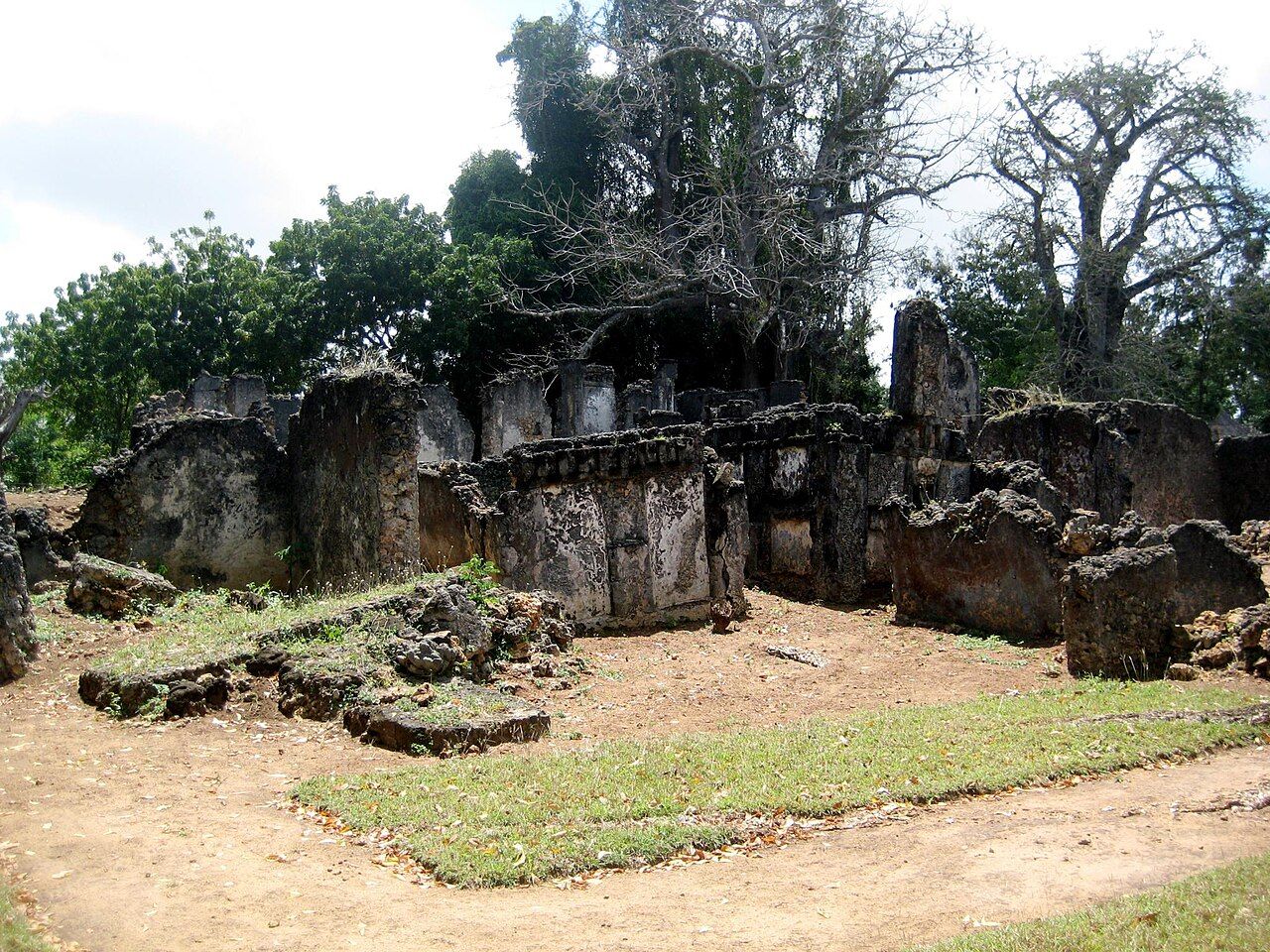
There is little in the way of facilities. A caretaker may show you around and explain what is known of the site, and a small fee is often asked. These are graves, so walk around rather than over them, and do not climb on the pillars. If the coastal ruins draw you, Kilwa Kisiwani further south shows the same culture at the height of its wealth.
Roads, bajaji and bicycles
Tanga is linked by road to Dar es Salaam to the south, to Moshi and Arusha to the north-west, and to the Kenyan border to the north. Long-distance buses serve all of these routes; the general advice on choosing a bus and travelling by day is in buses, dala-dalas and getting around. In town, walking, bicycle taxis and bajaji three-wheelers cover most needs.
For the caves and Tongoni, a taxi or a hired driver for half a day is the easy choice, and shared minibuses run along the main roads if you are happy to walk the last stretch. Agree the price and the waiting time before you leave.
Heat, rain and the sea breeze
The coast is warm and humid all year. The drier months from about June to October are the most comfortable, and January and February are hot but often settled. The long rains, roughly March to May, can make the cave approaches muddy and the inside wetter and more slippery. Mosquitoes are present on the coast all year; ask a doctor about malaria prevention before you travel.
Pairing Tanga with the hills and the coast
Tanga works best as a hinge. A few hours inland, the road climbs to Lushoto and the Usambara Mountains, with cool air and long walks. A shorter drive south brings you to Pangani and its beaches. Three or four days split between town, caves, ruins and coast give a fuller picture of the north-east than any single stop, and none of it is crowded.
Take your time in town too. Sit on the seafront at dusk, eat grilled fish or mishkaki, small skewers of grilled meat, from a street stall, and watch the bay darken. Tanga does not ask much of a visitor, and it gives back more than its quiet reputation suggests.
Pictures here: Ali A. Fazal – CC BY-SA; Shaun D Metcalfe away in Thailand – CC BY; Alexandra Kelly – CC BY


