
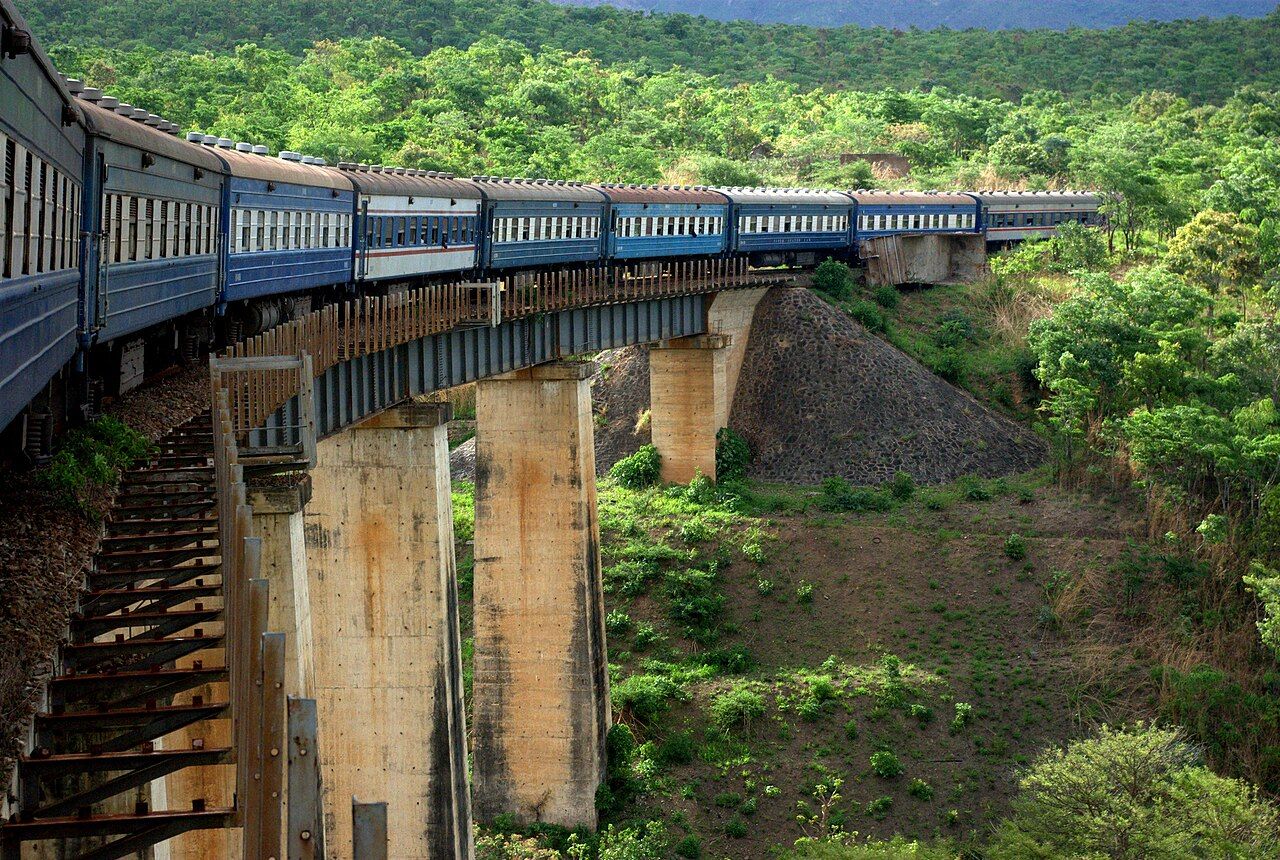
The TAZARA railway runs from Dar es Salaam on the Indian Ocean to Kapiri Mposhi in central Zambia, a journey of well over a thousand miles. It was built in the 1970s with Chinese support to give landlocked Zambia a route to the sea, and it remains one of the great long train journeys of Africa. For travellers it is less a way of getting somewhere fast than a chance to watch a large part of the country roll past, sleep to the sound of the rails and talk with people heading home.
The route
From Dar es Salaam the line heads west and south-west across the coastal plain, then through wild country on the edge of the great reserve that most people still know as the Selous. In the dry season you may see antelope, giraffe and sometimes elephants from the window, though nothing is guaranteed and the train does not stop for wildlife. The big southern parks are covered elsewhere; from the train they are a passing glimpse rather than a visit.
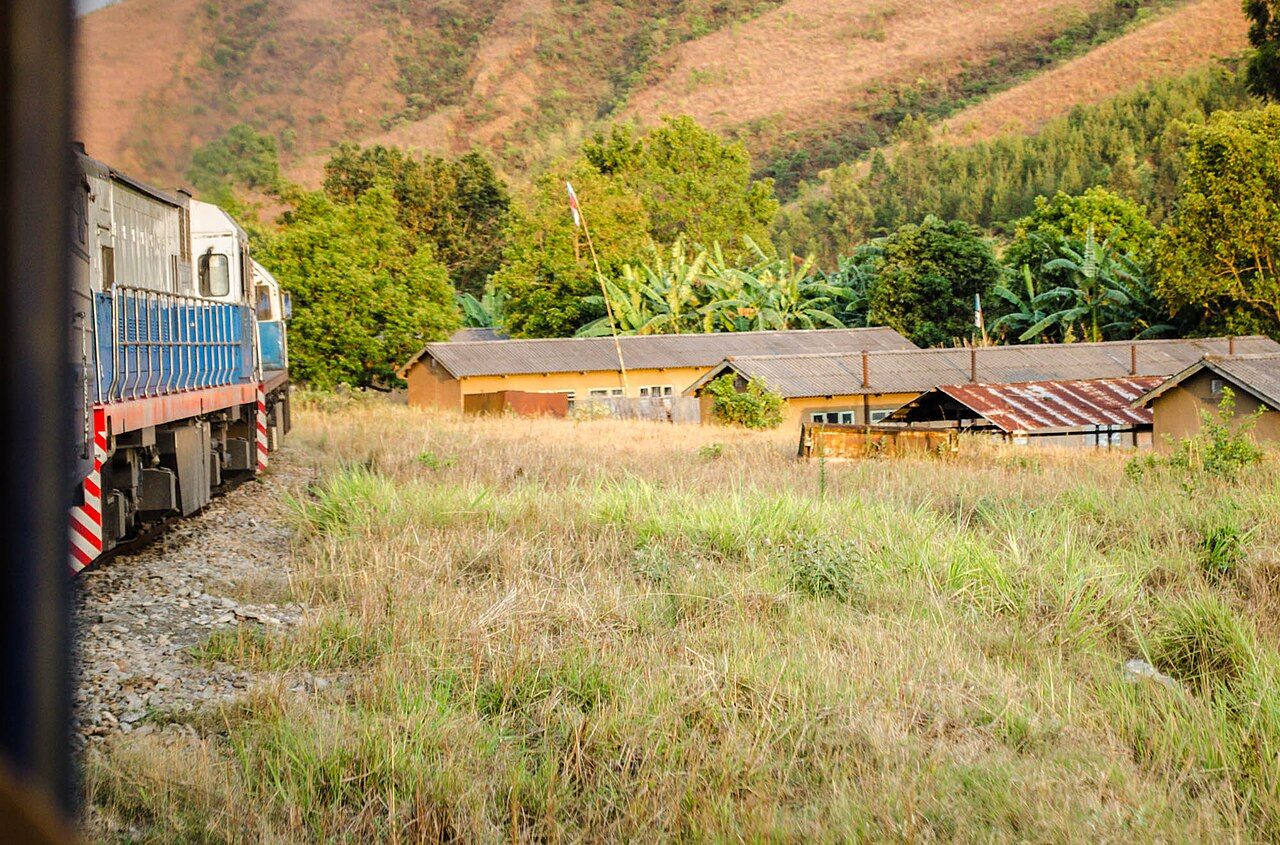
Further on, the line climbs into the southern highlands, through tunnels and over bridges, past tea, maize and banana farms, to Makambako and Mbeya. This is often the most scenic stretch, cooler and green. Beyond Mbeya it crosses the border into Zambia at Tunduma and Nakonde and runs on through miombo woodland to Kapiri Mposhi. Many travellers ride only the Tanzanian section, getting off in Mbeya and continuing by road.
Mbeya is a good place to break the journey. The town sits high in the southern highlands, with cool nights, green hills and crater lakes nearby, and it links by road to Lake Nyasa in the south and to the far west. Riding just this stretch also keeps the journey to a more manageable length, usually a long day and a night, depending on the train.
Classes and what they mean
The train has several classes, and what you get can vary from one trip to the next.
- First class usually means compartments with four berths, a small window table and doors that lock. Compartments are generally separated by gender unless a group takes the whole compartment.
- Second class sleeper usually has six berths per compartment, simpler and more crowded.
- Seated classes have rows of seats and are the cheapest, busy and sociable, and tiring over a long journey.
Bedding may be provided in the sleeper classes; bring a sheet or sleeping bag liner just in case. Buy tickets in person at the station a few days ahead if you can, especially for sleeper berths around holidays.
Further on: Buses, dala-dalas and getting around
Delays are part of the journey
The TAZARA has a long history of delays. Departures are infrequent, a few times a week at most, and the journey can run many hours behind schedule, sometimes more than a day. Breakdowns, freight on the line and maintenance all play a part, and departure days themselves sometimes change. None of this is unusual, and the best preparation is patience and a flexible plan.
Do not book a flight or a connection that depends on the train arriving on time. Allow a spare day at the far end. If timing is important, the road is quicker.
When delays come, they rarely come with an explanation. The train may sit at a small station for hours while freight passes or a fault is fixed. Passengers get off to stretch their legs, buy food from the platform and talk. Stay within earshot of the whistle, and keep your ticket and valuables with you, because the train can leave with little warning.
Life on board
Trains usually carry a dining car serving simple meals such as rice, beans and chicken, along with tea and soft drinks, though availability varies. At stations, vendors sell fruit, roasted maize, boiled eggs and snacks through the windows, which is part of the pleasure. Carry plenty of water and food of your own as a backup, and keep small notes in Tanzanian shillings.
Toilets can be basic and water may run out, so pack toilet paper, hand gel and wet wipes. Lock your compartment when you leave it and keep valuables with you, especially at night. Windows open for air, which is welcome in the heat but lets in dust and, at night, mosquitoes; a light scarf and repellent help. Stations can be busy; keep an eye on your bags when the train stops.
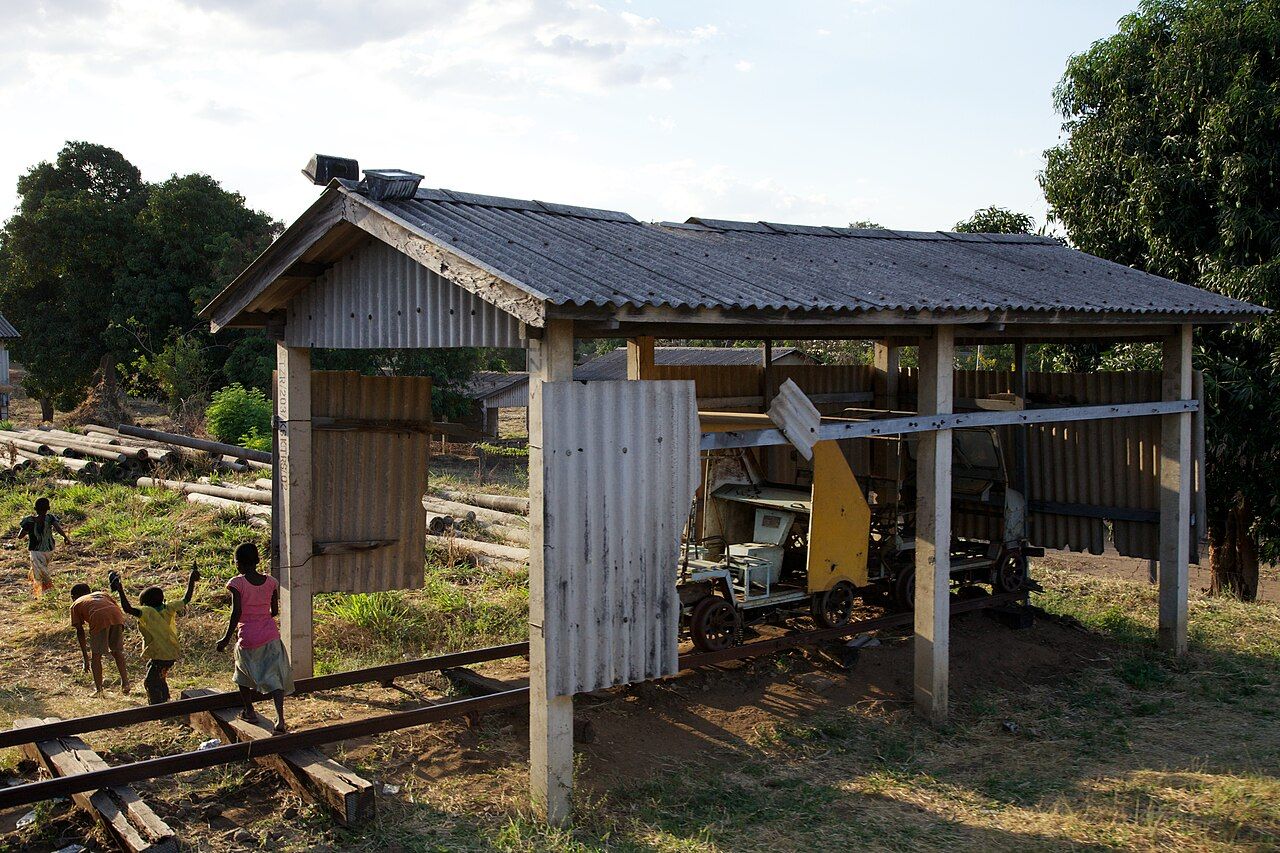
The people you share a compartment with are often the best part of the journey. A greeting in Swahili opens doors; a few basic phrases are worth learning before you board.
The station in Dar es Salaam
TAZARA trains leave from their own station in Dar es Salaam, separate from the central railway station used by other lines, a fair distance from the city centre. Allow plenty of time to get there through traffic, and arrive early, because boarding can be slow. The newer standard-gauge railway runs from a different station altogether; it serves other routes and is covered with the buses.
When to ride
The dry season, roughly May to October, is the most comfortable time, with clear views, cooler nights in the highlands and the best chance of wildlife in the bush. In the rains the country is green and lush, but the line is more prone to washouts and longer delays. The way the year moves across the country is covered in the seasons guide. Malaria is present along much of the route; ask a doctor about prevention before you travel.
Pictures here: Richard Stupart – CC BY; Erasmus Kamugisha – CC BY-SA; David Brossard – CC BY-SA


