
Katavi is one of the largest national parks in Tanzania and one of the least visited. It lies in the far west of the country, south of Lake Tanganyika's northern towns and a long way from the busy northern circuit. Most of it is woodland, but its heart is a series of wide grassy floodplains around seasonal lakes and rivers, and that is where the animals gather.
The appeal is simple. In the dry season, as water disappears, wildlife concentrates in remarkable numbers around the last pools, and you may watch it for hours without seeing another vehicle.
A park shaped by water
Katavi's year turns on rain. In the wet months, the Katuma River spreads across the plains and fills shallow lakes such as Katavi and Chada. Grass grows tall, roads become impassable and many animals spread out into the woodland.
From about June the land dries. Lakes shrink to mud, the river breaks into pools, and animals are drawn back to whatever water remains. By the end of the dry season, in September and October, the plains are dusty and pale, and the remaining pools are the busiest places in the park.
It is a hard season for the animals, and the drama can be raw: crowded water, weak animals, predators waiting. Watch with patience and respect, and keep your distance from stressed wildlife.
The woodland that covers most of the park is a different world from the plains. Known as miombo, it is a dry, open forest of broad-leaved trees that turns red, copper and gold as new leaves appear late in the dry season. Driving through it, you may see roan or sable antelope, elands and many woodland birds. It is quiet country, and it can feel endless.
Few visitors come, and that shapes the experience as much as the animals do. There are no queues of vehicles at sightings, and on many days you may not meet another group at all. The silence takes some getting used to.
Hippos and crocodiles
Katavi is known above all for its hippos. As the Katuma River dries, hundreds can pack into the remaining pools, lying almost on top of each other in the mud. The noise, the smell and the constant shifting of bodies are unlike anything you will see in a wetter park. Arguments between males break out often, with open jaws and churned water.
Crocodiles share the same shrinking pools, and some shelter in burrows dug into the riverbanks to escape the heat. Never walk close to the edge of a pool or riverbank, even if it looks empty.
Further on: Mahale, the mountains that fall into Lake Tanganyika
Buffalo, elephants and the plains
Large herds of buffalo roam the floodplains in the dry season, sometimes many hundreds strong, moving slowly between grazing and water. Elephants come down from the woodland to drink, giraffes browse along the edges, and zebra, topi, impala and other antelope graze the open grass. Lions follow the buffalo, and other predators, including leopards and spotted hyenas, live in the park, though sightings are never certain.
Birdlife is rich too, especially near water. Storks, herons, pelicans and fish eagles gather at the drying pools, and vultures circle overhead. A pair of binoculars makes a big difference in a park where distances are wide.
Dawn and dusk are the times to be out. In the cool first hour, lions may still be on the move and herds gather at the edge of the water before the heat drives them into shade. By late afternoon the light softens, animals return to drink, and the plains glow before the sun drops behind the trees.
Walking with a ranger
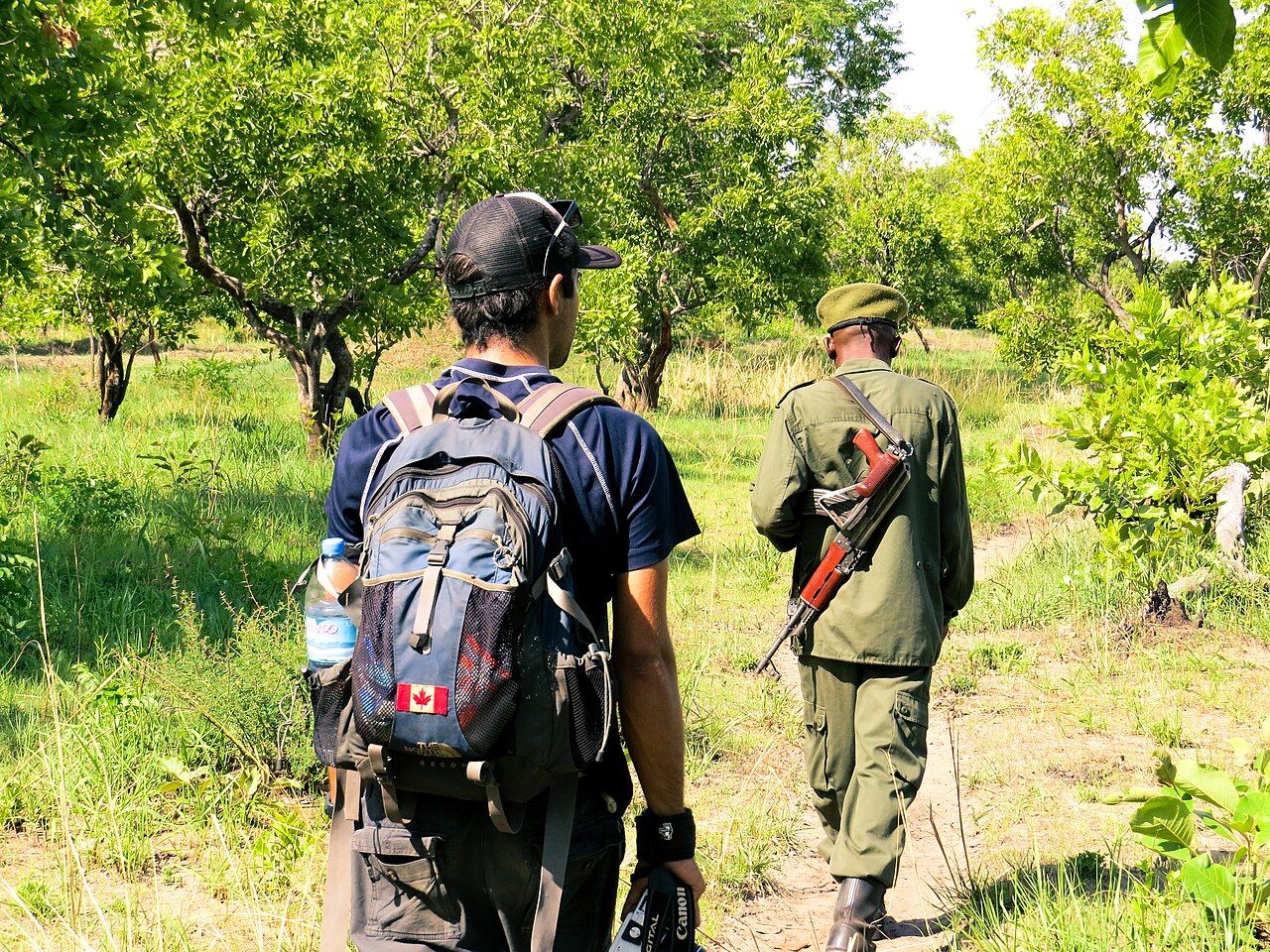
Part of Katavi's quiet comes from the chance to explore on foot. Walks are led by an armed park ranger, who sets the route, reads the animals' behaviour and decides how close to go. On foot, the park feels very different: you notice tracks, dung and birdsong, and the size of a buffalo becomes much more real.
Follow the ranger's instructions without exception, walk in single file, and keep talking to a minimum. Wear neutral colours and sturdy shoes, and bring water.
The long road to Mpanda
Distance is Katavi's defence. Most visitors arrive by small plane, often combining the park with the chimpanzee forests of the Mahale Mountains on Lake Tanganyika. Flights run on fixed days and in limited seasons, so plan around them.
By road, the nearest town is Mpanda, which is linked by long, rough roads to the rest of the country and by a branch of the railway. From Mpanda the park is not far, but getting to Mpanda itself takes days from the coast or the north. Roads can be very difficult or closed in the rains. If you travel overland, read the guide to buses and getting around and leave generous margins.
The best time is the dry season, from about July to October, when animals concentrate and tracks are open. During the long rains many places to stay close. The guide to dry seasons, long rains and short rains explains the wider pattern.
Tsetse flies and thin signal
Facilities are few and far apart. Bring what you need, including any medicines, and expect very limited phone signal. Tsetse flies are common in the woodland and their bites are painful; neutral, long-sleeved clothing helps, and dark blue and black tend to attract them. Ask a doctor about malaria and other health precautions well before your trip.
Above all, give yourself time. A few days in Katavi let you return to the same pools at different hours and see how the place changes from cool dawn to blazing midday to the long gold of evening.
Pictures here: Brian Harries – CC BY
